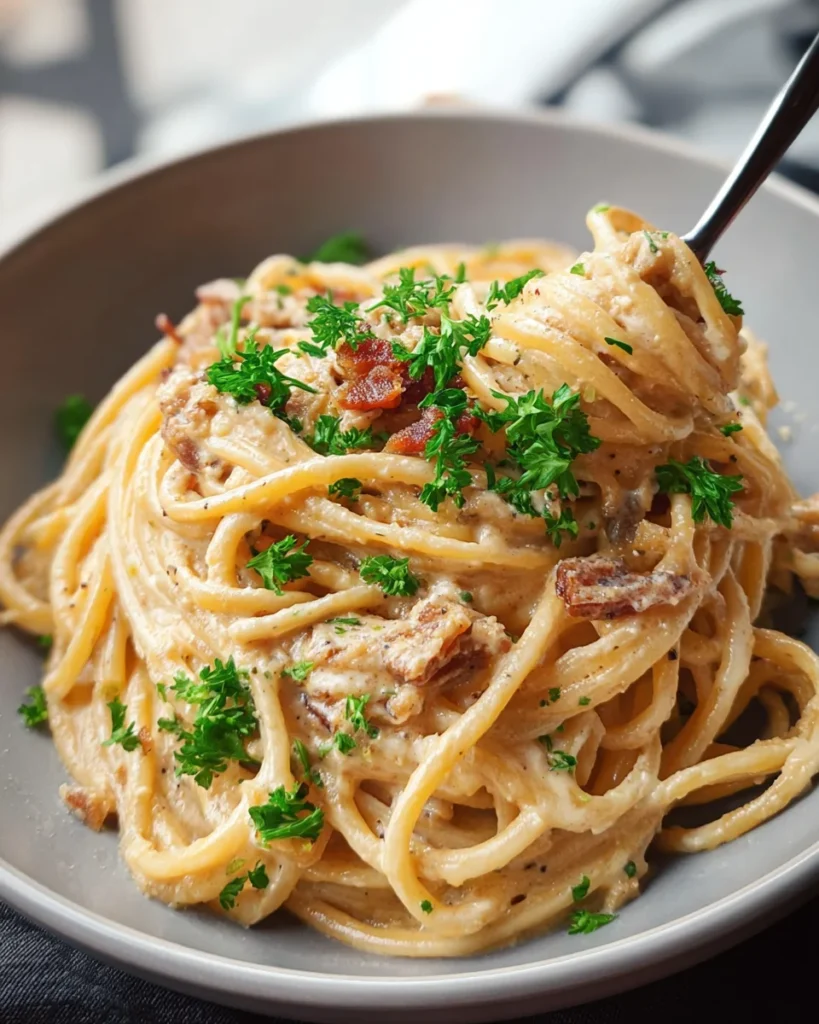
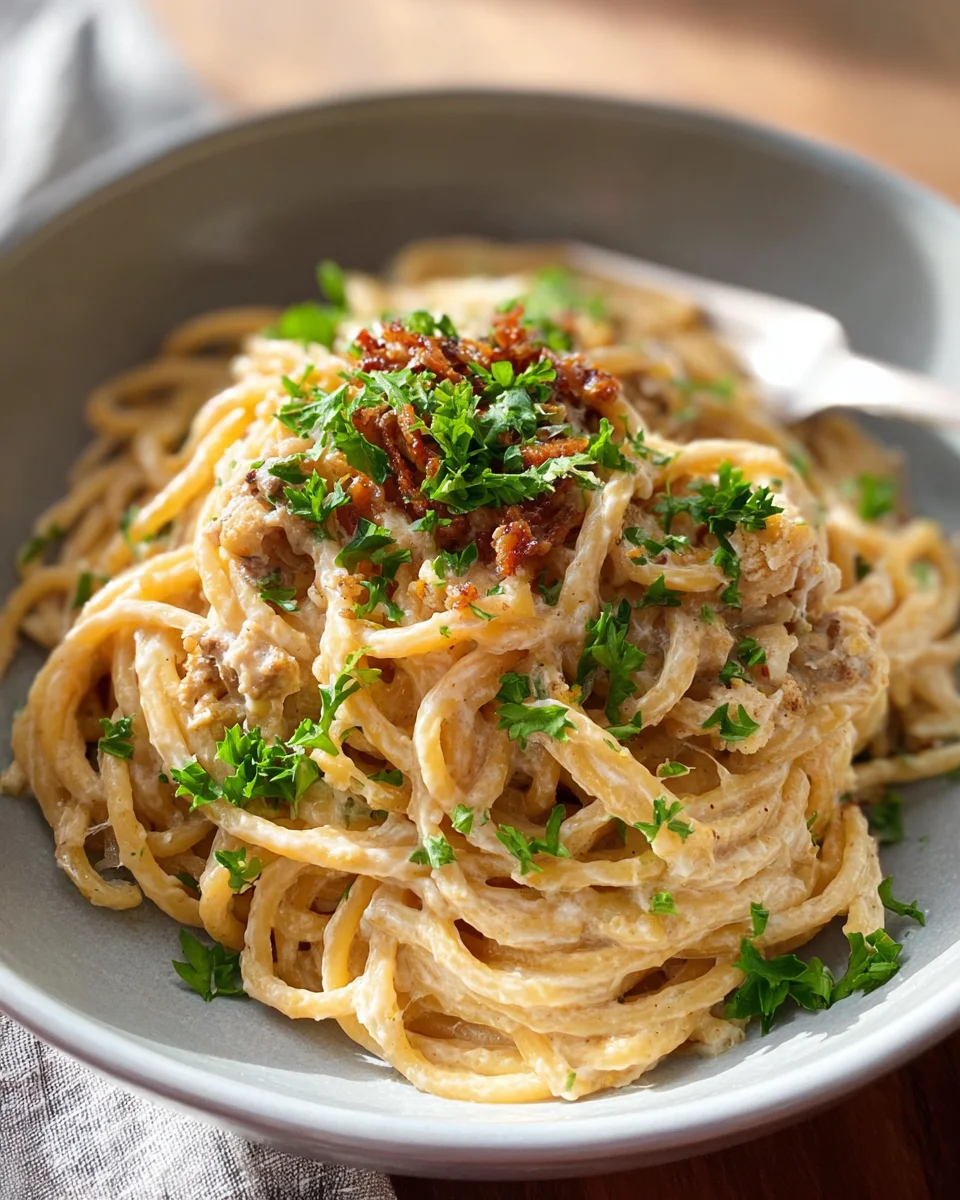
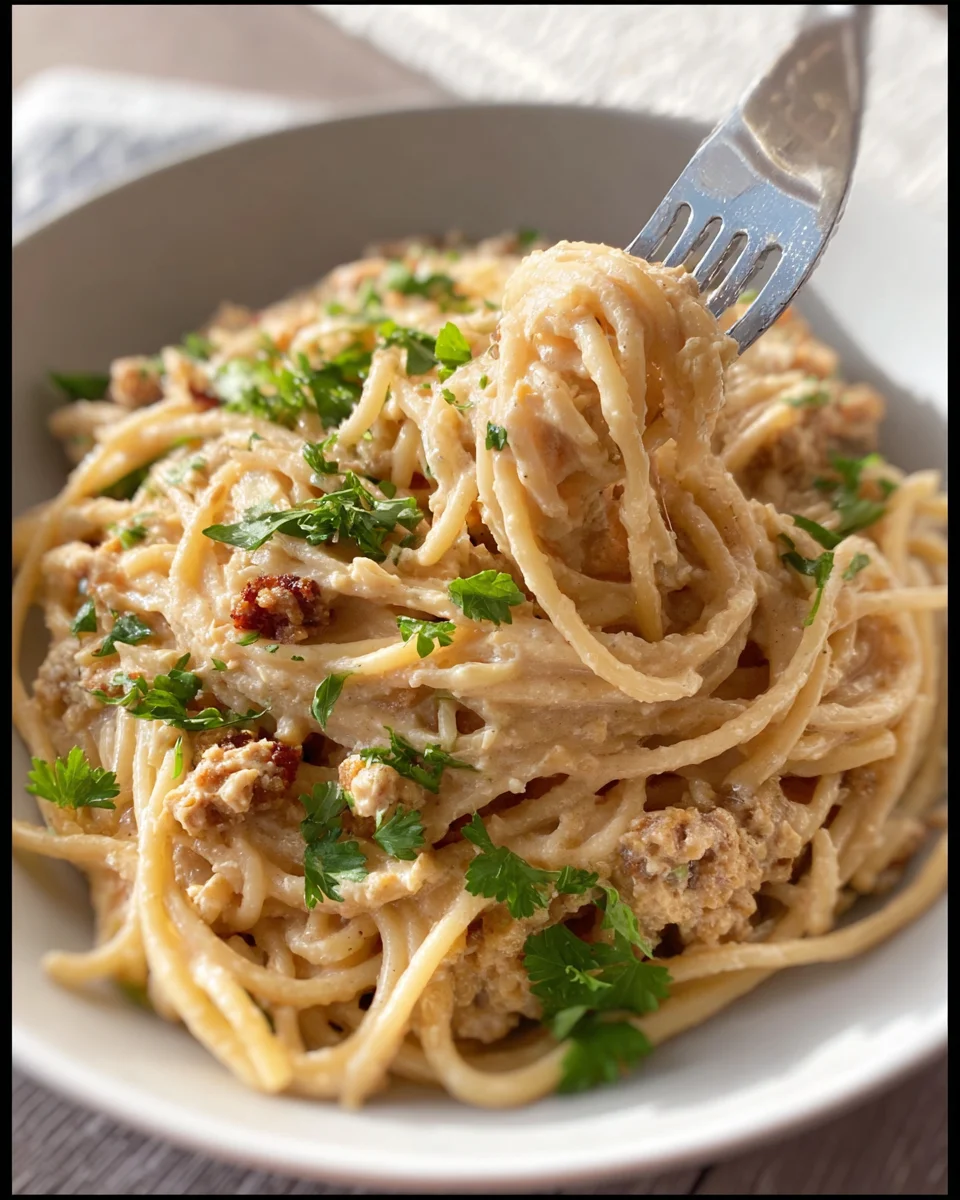
Tolles Rezept für vegane Spaghetti Carbonara mit cremiger Blumenkohl-Cashew-Sauce und veganem Speck (oder Räuchertofu). Vegane Blumenkohl Carbonara ist nicht nur eine köstliche Alternative zu traditionellen Pasta-Rezepten, sondern auch gesund und einfach zuzubereiten. Perfekt für familiäre Abendessen, besondere Anlässe oder eine schnelle Mahlzeit unter der Woche. Diese Sauce kombiniert die zarte Textur des Blumenkohls mit der Cremigkeit der Cashews, was jedem Bissen einen reichen und befriedigenden Geschmack verleiht.
Why You’ll Love This Recipe
- Einfach zu machen: Mit wenigen Schritten gelingt dir diese vegane Carbonara ohne großen Aufwand.
- Gesunde Zutaten: Die Kombination aus Blumenkohl und Cashews macht dieses Gericht nährstoffreich und sättigend.
- Vielseitig einsetzbar: Ob als Hauptgericht oder Beilage, diese Sauce passt zu verschiedenen Nudelsorten.
- Glutenfrei anpassbar: Verwende glutenfreie Pasta, um das Rezept für alle diätetischen Bedürfnisse geeignet zu machen.
- Veganer Genuss: Diese Variante verzichtet auf tierische Produkte, ohne auf Geschmack zu verzichten.
Tools and Preparation
Um die vegane Blumenkohl Carbonara perfekt zuzubereiten, brauchst du einige grundlegende Küchenutensilien. Stelle sicher, dass du alles bereit hast, bevor du anfängst.
Essential Tools and Equipment
- Hochleistungsmixer
- Kochtopf
- Pfanne
- Schneidebrett
- Messer
Importance of Each Tool
- Hochleistungsmixer: Dieser Mixer sorgt dafür, dass die Cashew-Sauce schön cremig wird – perfekt für die Carbonara.
- Kochtopf: Ein guter Kochtopf ist wichtig zum Kochen der Pasta und des Blumenkohls.
- Pfanne: Ideal zum Anbraten des veganen Specks oder Räuchertofus für zusätzlichen Geschmack.
Ingredients
For the Sauce
- 100 g Cashewkerne (natur, ungeröstet, ungesalzen)
- 500 g frischer Blumenkohl
- 3 Knoblauchzehen mit Schale
- 3 EL Olivenöl (45 ml = 41 g)
- 600 g Wasser (= 600 ml)
- 1 EL Zitronensaft (= 15 g)
- 40 g Hefeflocken
- 2 TL Gemüsebrühe Pulver (10 g)
- Salz und Pfeffer
For the Pasta
- 500 g Spaghetti (oder auch andere Nudeln wie Linguine, Penne oder Fusilli)
For the Vegan Bacon
- 125 g veganer Speck (oder Räuchertofu)
- 1 EL Öl (Bratöl oder Olivenöl)
Optional Toppings
- evtl. gehackte Petersilie (zum Bestreuen)
- evtl. vegane Parmesanalternative (veganes Pasta-Topping, geriebene Hartkäse-Alternative) (zum Bestreuen)
How to Make Vegane Blumenkohl Carbonara
Step 1: Prepare the Cauliflower and Cashews
Zuerst musst du die Cashewkerne mindestens eine Stunde in Wasser einweichen. Dies hilft dabei, sie weicher zu machen und sorgt für eine cremigere Sauce. Währenddessen den Blumenkohl in Röschen schneiden.
Step 2: Cook the Cauliflower and Garlic
Koche in einem großen Topf das Wasser auf. Füge den Blumenkohl und die Knoblauchzehen hinzu. Koche alles etwa 10–15 Minuten lang, bis der Blumenkohl weich ist.
Step 3: Blend the Sauce
Sobald der Blumenkohl gekocht ist, nimm ihn vom Herd. Gib den gekochten Blumenkohl und Knoblauch zusammen mit den eingeweichten Cashewkernen, Olivenöl, Zitronensaft, Hefeflocken und Gemüsebrühe in den Hochleistungsmixer. Mixe alles gut durch, bis die Sauce schön cremig ist.
Step 4: Cook the Pasta
Koche die Spaghetti nach Packungsanweisung in einem separaten Topf. Achte darauf, sie al dente zu kochen.
Step 5: Prepare the Vegan Bacon
In einer Pfanne etwas Bratöl erhitzen und den veganen Speck oder Räuchertofu anbraten bis er knusprig ist.
Step 6: Combine Everything
Mische die fertigen Spaghetti mit der cremigen Blumenkohlsauce. Rühre gut um, damit alle Nudeln gleichmäßig bedeckt sind. Füge den angebratenen veganen Speck hinzu.
Step 7: Serve and Enjoy!
Serviere deine vegane Blumenkohl Carbonara heiß und garniere sie nach Belieben mit gehackter Petersilie oder einer veganen Parmesanalternative. Guten Appetit!
How to Serve Vegane Blumenkohl Carbonara
Serving Vegane Blumenkohl Carbonara is all about enhancing its creamy texture and rich flavors. Here are some delicious serving suggestions to elevate your dish.
With Fresh Herbs
- Chopped Basil: Fresh basil adds a fragrant touch that complements the creamy sauce.
- Parsley Garnish: A sprinkle of fresh parsley brightens the dish and adds color.
Pair with a Salad
- Mixed Green Salad: A simple salad with mixed greens, cherry tomatoes, and a light vinaigrette balances the richness.
- Caesar Salad (Vegan): Switch traditional ingredients for vegan alternatives to keep it in line with your meal.
Add Crunchy Toppings
- Toasted Pine Nuts: Sprinkle toasted pine nuts on top for a nutty crunch.
- Vegan Parmesan: Grated vegan Parmesan gives an extra layer of flavor and texture.
Serve with Bread
- Garlic Bread: Crispy garlic bread is perfect for dipping into the creamy sauce.
- Focaccia: Soft focaccia with herbs pairs well and is great for soaking up sauce.
How to Perfect Vegane Blumenkohl Carbonara
To achieve the best results with your Vegane Blumenkohl Carbonara, consider these helpful tips:
- Soak Cashews: Soaking cashews for at least 2 hours makes them creamier when blended.
- Use Fresh Ingredients: Always opt for fresh cauliflower and garlic to enhance flavor.
- Adjust Consistency: If the sauce is too thick, add a splash of pasta cooking water for a silkier texture.
- Season Generously: Taste and adjust seasoning with salt, pepper, and lemon juice to brighten flavors.
- Cook Pasta Al Dente: For the best texture, cook your pasta al dente before mixing it with the sauce.
Best Side Dishes for Vegane Blumenkohl Carbonara
Complementing your Vegane Blumenkohl Carbonara with the right side dishes can create a satisfying meal. Here are some excellent options:
- Garlic Roasted Brussels Sprouts: These crispy sprouts add a delightful crunch and earthy flavor.
- Steamed Asparagus: Lightly steamed asparagus provides a vibrant green contrast to your dish.
- Caprese Salad (Vegan): Tomato slices, basil, and vegan mozzarella make a refreshing side.
- Zucchini Noodles (Zoodles): These low-carb noodles offer a healthy alternative while adding volume.
- Grilled Vegetable Platter: A mix of seasonal vegetables grilled until charred enhances any meal.
- Minestrone Soup (Vegan): A hearty soup packed with vegetables complements the main course beautifully.
Common Mistakes to Avoid
To make the perfect Vegane Blumenkohl Carbonara, it’s essential to avoid common pitfalls.
- Using roasted cashews: Using roasted cashew nuts can alter the flavor of your sauce. Stick with raw, unroasted cashews for a creamy texture.
- Overcooking the cauliflower: Cauliflower should be tender but not mushy. Cook it until just fork-tender to keep its texture in the dish.
- Skipping the seasoning: Failing to season adequately can lead to bland flavors. Don’t forget salt, pepper, and nutritional yeast for a cheesy taste.
- Ignoring the pasta water: Reserving some pasta water is crucial. It helps to adjust the sauce’s consistency and enhances flavor.
- Not blending long enough: A creamy sauce needs a thorough blend. Blend until completely smooth for the best results.
Storage & Reheating Instructions
Refrigerator Storage
- Store in an airtight container.
- Keeps fresh for up to 3 days.
Freezing Vegane Blumenkohl Carbonara
- Place in a freezer-safe container.
- Can be frozen for up to 2 months.
Reheating Vegane Blumenkohl Carbonara
- Oven: Preheat oven to 350°F (175°C) and bake until heated through, about 15 minutes.
- Microwave: Heat in 30-second intervals, stirring in between, until warm.
- Stovetop: Warm over medium heat in a pan, adding a splash of water or broth if needed.
Frequently Asked Questions
Here are some common questions about Vegane Blumenkohl Carbonara.
How can I make Vegane Blumenkohl Carbonara gluten-free?
You can use gluten-free pasta alternatives like rice noodles or chickpea pasta. They work well with the creamy sauce.
Can I add vegetables to my Vegane Blumenkohl Carbonara?
Absolutely! Spinach, peas, or mushrooms can enhance both flavor and nutrition.
What can I use instead of vegan bacon?
If you don’t have vegan bacon on hand, try using smoked tempeh or sautéed mushrooms for a similar umami flavor.
How do I adjust the creaminess of Vegane Blumenkohl Carbonara?
If you prefer a thicker sauce, reduce the amount of water when blending. For a thinner sauce, add more water gradually until desired consistency is reached.
Final Thoughts
This Vegane Blumenkohl Carbonara is not only delicious but also versatile! You can customize it by adding your favorite veggies or spices. Give this creamy delight a try; it’s sure to impress family and friends!
Vegane Blumenkohl Carbonara

Indulge in the creamy delight of Vegane Blumenkohl Carbonara, a wholesome twist on the classic Italian dish. This plant-based recipe combines the velvety texture of pureed cauliflower and cashews with perfectly cooked pasta for a satisfying meal that everyone will love. Perfect for family dinners, special occasions, or quick weeknight meals, this dish is not only delicious but also packed with nutrients. With its rich flavor profile and versatility, you can easily customize it by adding your favorite vegetables or adjusting the seasoning to suit your taste. Enjoy a guilt-free comfort food experience that’s sure to impress!
- Prep Time: 10 minutes
- Cook Time: 25 minutes
- Total Time: 35 minutes
- Yield: Serves 4
- Category: Main
- Method: Boiling/Sautéing
- Cuisine: Italian
Ingredients
- 100 g raw cashews
- 500 g fresh cauliflower
- 3 garlic cloves
- 3 tbsp olive oil
- 600 ml water
- 1 tbsp lemon juice
- 40 g nutritional yeast
- 500 g spaghetti or other pasta
- 125 g vegan bacon or smoked tofu
- 1 tbsp cooking oil
Instructions
- Soak cashews in water for at least 1 hour.
- In a pot, boil water and cook chopped cauliflower and unpeeled garlic for 10-15 minutes until tender.
- Drain and blend cauliflower, garlic, soaked cashews, olive oil, lemon juice, nutritional yeast, and seasonings until creamy.
- Cook pasta according to package instructions; drain.
- Sauté vegan bacon or smoked tofu in a pan until crispy.
- Toss pasta with sauce and crispy vegan bacon; serve hot.
Nutrition
- Serving Size: 1 bowl (250g)
- Calories: 490
- Sugar: 2g
- Sodium: 450mg
- Fat: 21g
- Saturated Fat: 3g
- Unsaturated Fat: 18g
- Trans Fat: 0g
- Carbohydrates: 63g
- Fiber: 9g
- Protein: 14g
- Cholesterol: 0mg